


Nigeria’s Uneasy Moment: The Coup Rumours and What They Mean || By Salawu Oluwaseun Moses

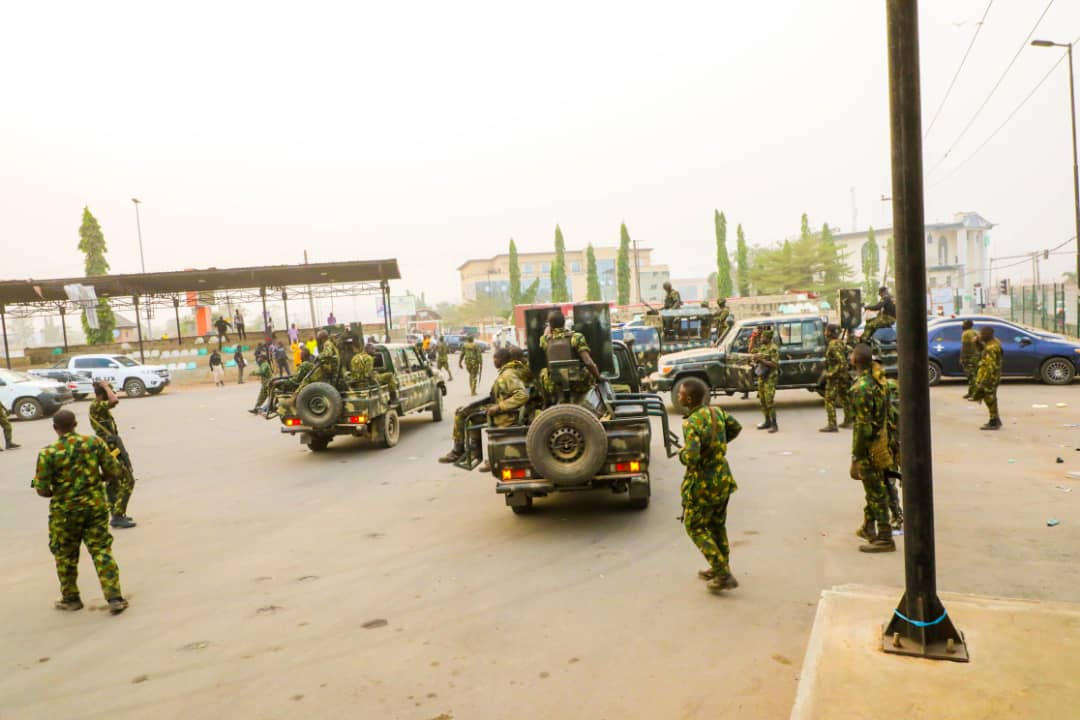
Nigeria once again finds itself in a tense and uncertain atmosphere following reports that several senior military officers have been arrested over an alleged plot to remove President Bola Ahmed Tinubu from the seat. The story has spread quickly across newspapers, radio, and social media, with conflicting details about how many officers were involved and how serious the situation really was. While some outlets claim that dozens of soldiers have been detained, the Defence Headquarters has denied the reports, calling them “false and misleading.” The military insisted that its recent internal actions are routine and not connected to any political plot. Still, many Nigerians remain uneasy, and not without reason.
After these reports emerged, President Tinubu carried out a major reshuffle in the security sector, replacing the heads of the army, navy, and air force. The Presidency described the changes as part of efforts to strengthen national security, but the timing has led many Nigerians to link the new military appointment with the alleged coup, raising the suspicion of many Nigerians. Whether that link is fair or not, it reflects a deeper public fear that the old ghosts of military interference in government may be stirring again.

That fear has strong roots in Nigeria’s history. Dating from the year 1960, where Nigeria got her independence, the country has experienced a long list of coups and attempted coups that shaped its political landscape. The first came in January 1966, followed by a counter-coup in July the same year. There were further takeovers in 1975, 1976, 1983, and 1985, and another attempt in 1990. The 1993 political crisis that followed the annulment of the June 12 election also opened the door for General Sani Abacha’s rule. For nearly three decades, Nigeria moved back and forth between civilian and military rule until democracy was finally restored in 1999. All these events left a deep scars and an uneasy relationship between the army and the people.

Whenever reports or rumors of a coup surface, Nigerians remember those years of uncertainty where hardship was as flowing as the river. Even when nothing happens, the rumour alone is enough to cause fear because it raises questions about whether the country’s democracy is truly safe. This is not only a Nigerian problem. Across Africa, the same story has been repeating itself. In just the last few years, soldiers have taken power in Mali, Burkina Faso, Guinea, and Niger.

The same pressures exist in Nigeria. Insecurity remains widespread in the North-East, the Middle Belt, and even parts of the South. Kidnapping and banditry have weakened public confidence in government.
At this point, Nigeria must handle the situation with wisdom and transparency. If some officers were truly arrested, the government should state clearly who they are, why they were arrested, and under what law. Quiet arrests and vague explanations only feed suspicion. If no such plot exists, then the authorities should also explain the steps being taken to maintain discipline within the armed forces and reassure the public. The military must continue to be loyal to the Constitution, not to any individual or group.
The current moment calls for calm but also for vigilance. Nigeria cannot afford to treat these reports lightly, nor should it return to the habits of fear and secrecy that defined the years of military rule. Now there is a need for the government, the military and the media to act with utmost sense of responsibility. Citizens also have a duty to avoid spreading false information that can create panic or harm national unity.
In the end, what is at stake is not just the survival of one government but the future of Nigeria’s democracy itself. The nation has already travelled a long and painful road to get here. We have seen from history, coups do not bring peace, progress, or justice but silent the voice of the people, instill fear, and bring regression.
Nigeria do not need another cycle of suspicion or fear, but a renewed commitment to openness, accountability, and the rule of law, this is the only way Nigeria can put its old ghosts to rest and move confidently toward a stable and democratic future.