



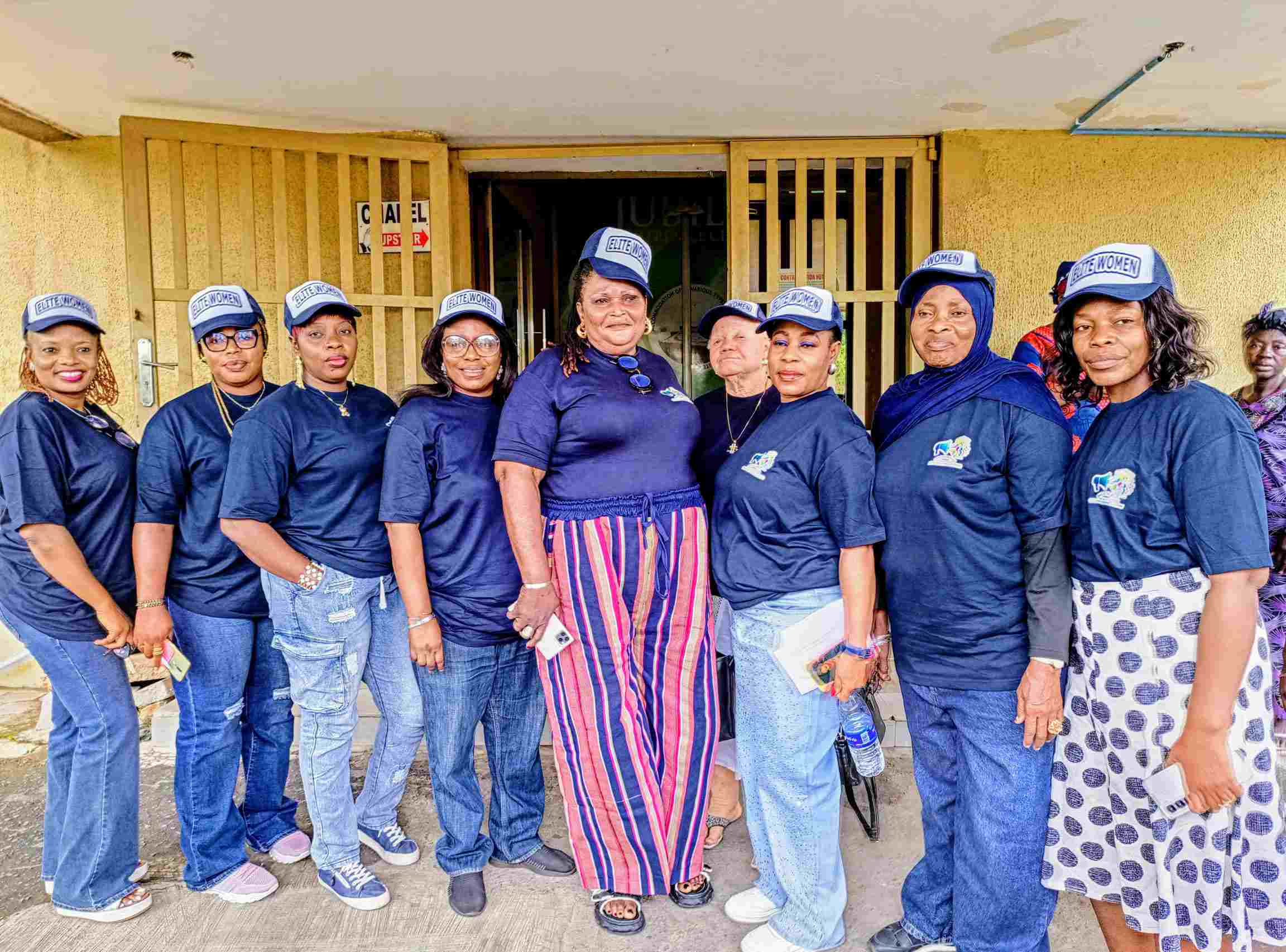
A new advocacy and humanitarian organisation, Elite Women, has been officially unveiled in Oyo State with a call on Nigerians to champion gender equality, end gender-based violence (GBV), strengthen democratic participation and hold public office holders accountable for good governance.
The organisation also challenged members of the elite class to become more actively involved in Nigeria’s electoral process, arguing that democracy can only flourish when all eligible citizens, irrespective of social status, exercise their civic responsibility.

The unveiling, which held in Ibadan on Thursday, had in attendance professional women in various industries, civil society organisations, development partners, media practitioners and stakeholders from different sectors, who made passionate presentations on women’s rights, civic responsibility, leadership, education and the urgent need to protect women and girls from all forms of violence.

Delivering her welcome address, the Director-General of Elite Women and Founder of the Sola Olagunju Foundation, Ambassador Dr. Olusola Olagunju, described the initiative as “more than an organisation,” saying it represents a movement committed to humanity, service and nation-building.

According to her, Elite Women, established in 2025, was founded to create a formidable platform for empowering women, supporting the girl-child, promoting healthcare and education, advocating good governance and encouraging responsible citizenship.
Olagunju disclosed that research conducted by the organisation showed that many Nigerians within the elite class in the society rarely participate in elections despite being among the most influential members of society.
She said the organisation would therefore embark on aggressive enlightenment campaigns targeted at professionals, academics, entrepreneurs and other elite groups to impress on them the importance of voting during elections.
“Our findings clearly indicate that many members of the elite class do not participate in elections. We have resolved to engage them directly and remind them that voting is both a constitutional right and a civic responsibility. Every eligible Nigerian must participate in shaping the future of our country,” she said.
She said Elite Women would serve as a voice for the voiceless, defend vulnerable women and children, advocate transparency and accountability in governance, promote quality healthcare and education, and provide humanitarian support to disadvantaged members of society regardless of the gender involved.
According to her, no nation can attain sustainable development where women remain marginalised, children are exposed to abuse and public institutions fail to discharge their responsibilities.
“We believe society can only prosper when women are empowered, children are protected and leaders are held accountable. Elite Women will continue to advocate for justice, equality and inclusive development while ensuring the concerns of ordinary Nigerians are heard.”
She called on individuals, corporate organisations, development agencies and community leaders to partner with the organisation in advancing its humanitarian and advocacy programmes.
“Our mission is rooted in compassion, justice and service not just as women professionals but as parents and mothers passionate about nation building. We invite everyone to join us as we build a society where opportunities are available to all, regardless of gender or social status,” she added.
One of the highpoints of the event was a keynote presentation by Alhaja Airat Omowumi Ogunbemi, an influential personality in Federation of Muslim Women Association of Nigeria (FOMWAN), who delivered a stirring lecture titled “Gender-Based Violence: A Call to Action.”
Describing gender-based violence as one of the gravest violations of human rights, Ogunbemi lamented that millions of women and girls continue to suffer domestic violence, rape, sexual harassment, child marriage, female genital mutilation, trafficking and other harmful practices.
She noted that beyond inflicting physical injuries, GBV destroys mental health, interrupts education, weakens families, reduces economic productivity and ultimately slows national development.
According to her, silence has remained one of the greatest enablers of abuse, urging survivors to speak out without fear while calling on communities to reject the culture of victim-blaming.
“Violence against women and girls is not a private matter. It is a societal problem that demands collective action. Every woman deserves to live free from fear, violence and discrimination,” she declared.
Ogunbemi stressed the need for stronger implementation of existing legal frameworks, including the Violence Against Persons Prohibition (VAPP) Law and the Child Rights Law, while urging government agencies to ensure effective enforcement.
She also outlined the responsibilities of Elite Women, including organising public enlightenment campaigns, providing legal and psychosocial support for survivors, strengthening referral systems, engaging traditional and religious leaders, mentoring young girls and collaborating with government institutions, civil society organisations, healthcare providers and development partners.
According to her, the organisation would continue to raise awareness at the grassroots, advocate respect and equality within families and communities and become ambassadors against gender-based violence across Oyo State and Nigeria.
Also speaking, former Oyo Assembly lawmaker and immediate past Special Assistant to Governor Seyi Makinde on Community Relation; Hon. Femi Josiah, called on men to become active participants in the campaign against gender-based violence, insisting that protecting women should not be viewed as the exclusive responsibility of women.
“The fight for women is a fight for humanity. Men must stand up for women because achieving justice requires collective responsibility,” he said.
He argued that although awareness campaigns remain important, sustainable progress can only be achieved when advocacy is backed by institutional support and political will.
He expressed concern over what he described as the disconnect between responsibility and authority within public institutions, noting that many individuals saddled with implementing policies often lack the authority to do so effectively.
“The worst thing that can happen to anyone is to be given responsibility without authority. No matter how brilliant your ideas may be, you cannot successfully implement them without institutional backing,” he revealed.
He further identified what he described as a political-administrative mismatch, explaining that many well-designed policies fail because those charged with implementation neither understand nor appreciate their responsibilities.
Hon. Josiah advocated greater emphasis on Family Life and Health Education in schools, describing it as an effective tool for promoting healthy relationships, mutual respect and gender equality from an early age.
Rather than limiting conversations to gender-based violence alone, he urged stakeholders to broaden the conversation to include gender parity, stressing that boys and girls deserve equal opportunities to thrive.
“There should be no difference between the childhood of a boy and that of a girl. Every child deserves equal love, equal opportunities and equal encouragement,” he said.
Drawing from his personal experience as a father, he recounted how his daughter consistently excelled academically despite overcoming health challenges, saying the experience reinforced his belief that girls should never be underestimated.
He added that families have a critical role in building the confidence and aspirations of young girls through love, encouragement and equal treatment.
The former aide of governor Makinde maintained that advocacy alone would achieve little if governments fail to demonstrate genuine commitment to implementing policies that protect women and vulnerable groups.
He therefore urged civil society organisations to build stronger alliances with like-minded institutions and engage political office holders constructively.
According to him, legislators occupy a strategic position in advancing reforms because they make laws, formulate policies and hold the executive accountable.
“As long as people who lack the necessary knowledge occupy critical legislative positions, meaningful progress will remain difficult. Citizens must demand accountability because government exists to serve the people,” he said.
He identified the family, the community and government as the three pillars capable of transforming society, warning that when all three fail, insecurity, abuse and social injustice become inevitable.
Representative of Traders Association, the Babaloja of Adelani Shopping Complex, Alhaji Abdulsalam Lukman, commended the leadership of the organization, describing the move as a good step in the right direction towards reinforcing societal morals and promoting human dignity among young Nigerians.
He vowed to take the message of the meeting to other Market leadership with the view to enforcing stricter measures against child-labour and abuse against the girlchild within various markets.
Other participants at the event in their separate remarks held unanimous agreement that the fight against gender-based violence, poverty, inequality and poor governance requires collective effort involving government institutions, traditional rulers, religious leaders, parents, schools, civil society organisations, development partners and the media.
They commended Elite Women for launching an initiative that combines humanitarian intervention, women’s empowerment, civic education and democratic advocacy, expressing optimism that the platform would contribute significantly to promoting social justice, gender equality and sustainable national development.