



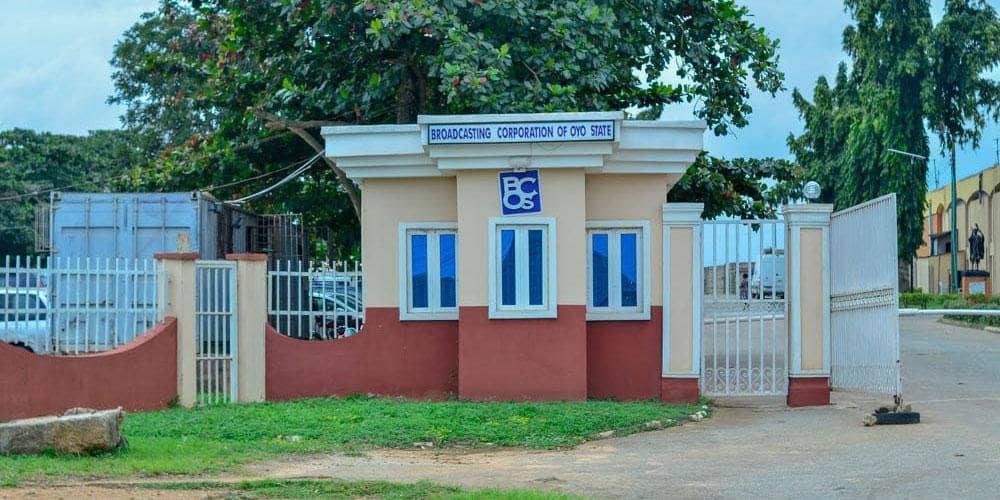
Calls on Makinde to Revive BCOS, Oke-Ogun FM, Ajilete FM
A political commentator and chieftain of the All Progressives Congress, APC in Oyo state, elder David Oluokun, has raised concerns over the alleged deteriorating condition of state-owned broadcasting stations in Oyo State, calling on Governor Seyi Makinde to urgently address their operational challenges and restore their capacity to serve the public.

Oluokun, in a statement, expressed concern over the condition of the Broadcasting Corporation of Oyo State (BCOS), Ibadan, Oke-Ogun FM in Alaga and Ajilete FM in Ogbomoso, arguing that the stations require adequate funding, modern equipment and improved working conditions to fulfil their mandates.
He said the stations, established to inform, educate and entertain residents, appeared to have lost much of their former vitality, raising questions about the state government’s commitment to sustaining public broadcasting institutions built with taxpayers’ money.

According to him, BCOS was once a prominent broadcasting institution in the South-West, serving as a platform for promoting Oyo State’s culture, history and development. He, however, expressed concern about the current state of its facilities and broadcasting equipment.
Oluokun also called for transparency over allegations that portions of the BCOS land had been allocated or sold for estate development, urging the state government to clarify the circumstances surrounding any such transactions and make relevant records available for public scrutiny.
He maintained that public assets should be managed in the interest of the people and that any disposal of government property should be accompanied by clear explanations of the process and benefits accruing to the state.
Beyond BCOS, Oluokun said Oke-Ogun FM and Ajilete FM also required urgent attention, particularly in the areas of equipment, transmission facilities, power supply and staff welfare.
He described Oke-Ogun FM as an important communication platform for residents of the geographically extensive Oke-Ogun area, noting that operational difficulties could limit access to public information, community news and cultural programming.
He further expressed concern about the reported condition of the station’s staff accommodation and its dependence on diesel-powered generators, warning that inadequate funding for power could disrupt regular broadcasting.
Oluokun urged the Makinde administration to explain the concrete steps taken to rehabilitate the stations, upgrade their equipment and ensure that they operate effectively.
He also called for an investigation into reports and allegations concerning outstanding salaries, pension obligations and other staff welfare issues, stressing that the revival of public broadcasting must include investment in the personnel responsible for running the institutions.
According to him, restoring the stations should go beyond repairing transmitters and purchasing equipment to include providing a conducive working environment, developing staff capacity and establishing sustainable funding arrangements.
Questions Government’s Media Engagement Strategy
Oluokun also questioned what he described as the administration’s apparent preference for private radio stations for government media engagements while state-owned broadcasting institutions face operational challenges.
He recalled that during the administration of the late former Governor Adebayo Alao-Akala, monthly media chats were held on BCOS, providing a platform for the government to communicate its policies and respond to public concerns.
He asked why BCOS had not been given a similarly prominent role in Governor Makinde’s media engagements, arguing that the use of the state-owned station could help sustain its relevance and strengthen public broadcasting.
Oluokun, however, clarified that he was not opposed to the government’s engagement with private broadcasters, noting that such partnerships could help reach wider audiences.
Rather, he argued that private media engagements should complement, rather than undermine, the public broadcasting infrastructure maintained with taxpayers’ funds.
He also called on the government to disclose its funding priorities and explain how expenditure on publicity and media engagements was balanced against the need to sustain BCOS, Oke-Ogun FM, Ajilete FM and other state-owned broadcasting facilities.
Oluokun stated that he was not alleging, without documentary evidence, that funds had been diverted from the state-owned stations to private broadcasters. Instead, he called for transparency in public expenditure and a clear explanation of the administration’s priorities.
Calls for Urgent Rehabilitation
Describing BCOS as an important part of Oyo State’s broadcasting heritage and cultural identity, Oluokun said the corporation and its zonal stations had the potential to promote indigenous languages, showcase local talent and provide communities outside Ibadan with greater access to public information.
He warned that when community-based stations struggle to maintain regular operations, the consequences extend beyond the facilities themselves to the people they were established to serve.
Oluokun therefore challenged Governor Makinde to make the rehabilitation of BCOS, Oke-Ogun FM, Ajilete FM and other state-owned broadcasting stations a priority before the end of his administration.
He urged the government to publish an assessment of the stations’ operational conditions, outline plans for upgrading their equipment, clarify the management of public assets and address outstanding staff welfare concerns.
He also called for sustainable funding, reliable power supply, modern transmission facilities and adequate resources for routine operations.
Oluokun, who is identified as BSA Voice of Reason Media and RHAIN Coordinator, said the people of Oyo State deserved answers and a clear plan to prevent the state’s public broadcasting institutions from further decline.