

From Okeho To The World: Tolulope Olukokun, The Engineer Who Built His Way Into Politics

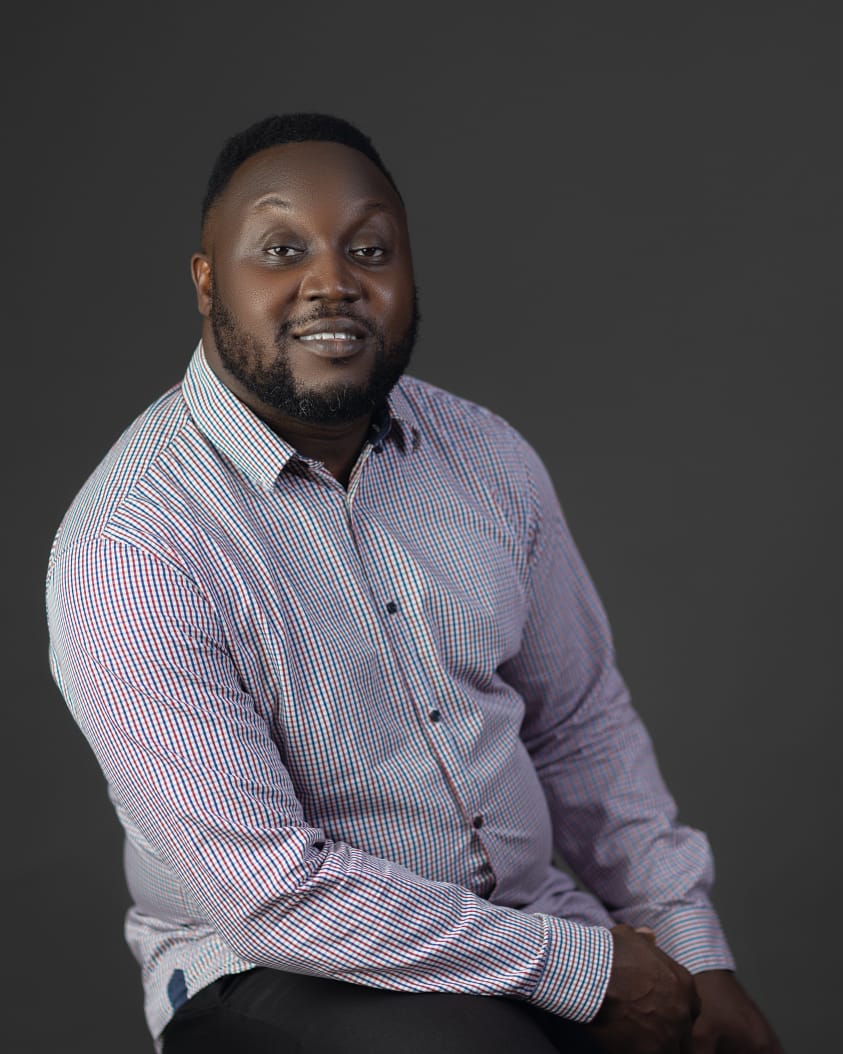
1 A Son of Okeho
Some forty years ago, at Fatula Hospital in Okeho, Grace TaiwoOlukokun gave birth to her fourth child, a boy who would spend the rest of his life building things. His father, (Late) Chief Deacon Sunday Olusegun Olukokun, and his mother, both primary health workers, raised five children together; two girls and three boys in a home built on faith, discipline and service to others. By origin the family traces back to Ilua, though Tolulope was born and largely raised around Okeho, the town that today serves as the headquarters of Kajola Local Government, the very constituency he now seeks to represent.
Even as a boy, Tolulope stood apart. He was, by his own account, a deep thinker, quiet in the way that watches rather than waits, and restless in the way that takes things apart to see how they work. He tinkered. He built. He worked hard long before anyone was paying him to. It is a shape of character that has defined the four decades since: an engineer’s instinct, wrapped around a public servant’s conscience.

He is married, with children.

2 Learning to Build
His education began close to home, at Durodoyin Nursery and Primary School in Okeho which he concluded in 1995, before he moved on to Okeho/Iganna Grammar School, completing his secondary education in 2001. Even then, he was not content with a single curriculum. Every school holiday became an informal apprenticeship in computers and information technology, and by the time he left secondary school he had already collected a stack of ICT certifications earned entirely on his own initiative.

In 2003 he enrolled at The Polytechnic, Ibadan, for a National Diploma in Mechanical Engineering, and by 2009/2010 he had completed his Higher National Diploma in the same field, graduating with an Upper Credit equivalent to second class upper. By then he had already registered his first ICT business, teaching computer skills and building software for government and commercial clients alike — the beginning of a long, layered working life that would eventually carry him from Ibadan to Ogbomoso, and from the University of Ibadan to Stockholm and Barcelona.
3 A Season of Service
Like every young Nigerian graduate, Tolulope’s National Youth Service year became his first real test in public life, and he treated it as more than a formality. Posted to Abeokuta, and later to the Oyo State Youth Empowerment Scheme under the administration of then-Governor AbiolaAjimobi, he put his self-taught ICT background to immediate use — and then went further, using his position to look out for his own people. Through his influence on the scheme, Kajola secured as many as 1,000 cadet placements, the second-highest beneficiary count of any local government in the state. It was his first taste of what it means to move public resources toward people too often overlooked, and a lesson he has carried ever since.
He went on to serve in this position, before moving into the classroom himself.

4 The Spark of 2012
On the first day of January 2012, the Nigerian government removed the fuel subsidy overnight. Petrol prices jumped, the country erupted into the “Occupy Nigeria” protests, and for one young mechanical engineer in Ibadan, a personal question became a mission: how do you get to work when you can no longer afford to rely on fuel?
Tolulope’s answer was to convert a petrol-powered vehicle to run on electricity — the first such conversion in Nigeria. It did not immediately become a business; retrofitting cars, he soon learned, was too costly to scale. But it set him irreversibly on a new path. For the following years he balanced two lives, lecturer and engineer, teaching mechatronics, advanced manufacturing, robotics and control systems in the Mechatronics Department at The Polytechnic, Ibadan, from 2012 to 2020, and helping shape the national polytechnic curriculum for the discipline, before moving briefly to the Federal University of Oye-Ekiti from 2020 to 2021. But the idea from 2012 never let go of him. In 2022, after receiving a grant from Siemens in Germany, he made the leap — resigning from academia to build his own company, full-time.
5 Building his company
That company, Nigeria’s first electric bicycle manufacturer, and the venture that carried Tolulope’s name into rooms far beyond Ibadan. Unable to afford imported cargo bikes to lease to small businesses, he decided, simply, to manufacture them himself. The result was a range of electric cargo bicycles built almost entirely from locally sourced components and powered by recycled lithium-ion cells reclaimed from old laptop batteries — including the ThinkBikesCoolMAX, a three-wheeled electric cargo bike fitted with an onboard battery-powered fridge, designed to stop a farmer’s produce from spoiling on the long ride to market.
The recognition followed quickly. ThinkBikes reached the top 10 of the ClimateLaunchpad Global Grand Finals — the world’s largest cleantech business-idea competition — in 2021, won Nigeria’s SMSE Award in 2022, and expanded into Ghana while growing to serve well over a thousand users at home. International press took notice: Forbes Africa put Tolulope on the cover of its December 2024 feature on solo entrepreneurs, “Sole Searchers”; BBC and DW ran documentary features on his work; CNN covered his story; and at home, Channels Television, the Broadcasting Corporation of Oyo State (BCOS) and Splash FM have all carried his voice to Nigerian audiences.
6 Powering a Continent
As Founding Director of E-Mobility at AfricaNEV, Tolulope built and led Africa’s first EV technician training programme, which has since trained more than a thousand participants across the continent, including a cohort delivered in Nairobi, Kenya, in partnership with GIZ Kenya, Roam and Advanced Mobility Africa. He was elected pioneer Vice President of the Electric Mobility Promoters Association of Nigeria (EMPAN), the country’s national e-mobility industry body.
And in Celloop, the company he co-founded and now serves as Chief Technology Officer, he found a way to close the loop entirely. Celloop takes the same kind of second-life battery cells that once powered his bikes and turns them into affordable renewable-energy storage for Nigerian homes and small businesses, on a Battery-as-a-Service model. He has led Celloop’s technical workstream on an Innovate UK–backed Zero-Emissions Generator consortium and co-founding Celloop EU OÜ in Estonia to build a European product line after receiving a grant fro EIT. Across both companies and AfricaNEV, he has personally trained people across Africa and Europe in e-mobility and battery skills, a number of whom are now building their own careers and companies in the sector.
7 On the World Stage
Tolulope’s work has carried him into many rooms globally. He was named a 2024/2025 Obama Foundation Africa Leader, and shortlisted for the UK Royal Academy of Engineering’s Africa Prize for Engineering Innovation, winning its “One to Watch” award in 2023. He has represented Nigeria at back-to-back UN climate summits — COP27 in Sharm El-Sheikh, where he was the only Nigerian selected to pitch for a $100,000 prize, and COP28 in Dubai — as well as the United Nations’ Least Developed Countries conference in Doha, Qatar.
His academic path ran in parallel: a Master’s in Urban Mobility from KTH Royal Institute of Technology in Stockholm and UPC Barcelona, where his thesis examined how Lagos’s informal danfo transport sector might adopt alternative powertrains, and a place representing UPC on the U!Train 2025 exchange programme on sustainable entrepreneurship, travelling from Darmstadt, Germany to Graz, Austria.
And running underneath all of it has been a quieter, more deliberate preparation for public life. As a Fellow of the Africa Leadership Forum — founded by former President OlusegunObasanjo, Tolulope studied leadership and policy directly. He interned at the Oyo State House of Assembly under MrsAyorinde, watching legislative work up close. He has since visited the German Bundestag in Berlin for direct engagement with federal lawmakers, and held further parliamentary engagements in the United Kingdom. Taken together, it is a preparation he describes simply: grassroots public service, engineering practice, and firsthand exposure to how legislatures actually work, in Nigeria and abroad.
8 Why I’m Running
“I am a change-maker in politics, a solution-provider in politics, an innovator in politics and a catalyst.”
That is how TolulopeOlukokun describes himself and it is why he is now seeking to represent Kajola Constituency in the Oyo State House of Assembly, under the Nigeria Democratic Congress (NDC), in the 2027 general elections.
“For proper representation that truly serves the people — my people have long been neglected. This is the time for them to enjoy and be exposed to all opportunities.”
It is, in many ways, the same instinct that once sent a young NYSC corps member looking for ways to bring more Kajola cadets into a state empowerment scheme, and the same instinct that sent a lecturer out to build an electric bicycle company from nothing. Tolulope’s campaign carries that instinct forward, captured in three words: