

Elections 2027: Between Fear and Hope, What Should Nigerians Expect? || By Oluwaseun Moses Salawu

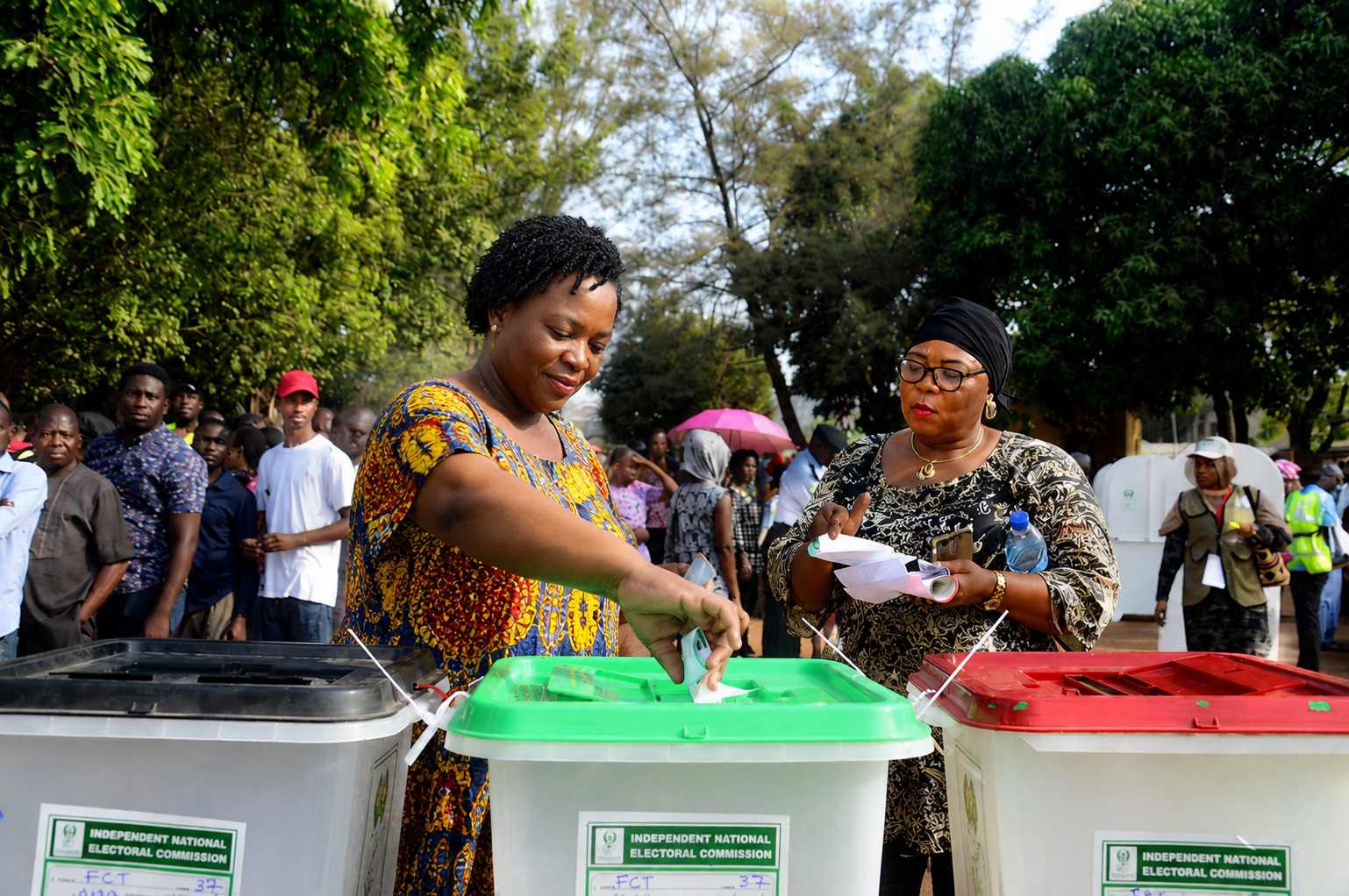
There is a sense beyond the usual political talk as Nigeria moves toward the 2027 general elections. It’s an ambiguous feeling. In homes, offices, markets, churches, mosques, campuses and social gatherings, many Nigerians are asking the same question: what will happen in 2027?
It is a question born not only of politics, but of economic hardship, insecurity, and the deep distrust that have dominated national conversations in recent years.

It is well established that President Bola Ahmed Tinubu is one of the best political strategists in Nigeria.
He has managed to form alliances, won tough political battles, and, indeed, has never been defeated in any election he participated in throughout his political career.

Such performance has made him popular among his followers, who refer to him as a great political strategist. On the other hand, the critics see his success in the elections as being due to political structures, rather than policies of the government.
One of the greatest challenges facing Nigeria today is not simply who wins in 2027 but whether citizens will have complete confidence that the process reflects the genuine will of the people.
The controversy surrounding the 2023 presidential election did not disappear after the courts delivered their judgments.
Long after the election was over, political discussions continued to revolve around questions of how election results were transmitted and the performance of technology introduced to increase transparency and public confidence in electoral institutions.
Even after the Supreme Court’s endorsement of President Tinubu’s election victory, some sections of the populace remained doubtful, suggesting that legal finality does not always put an end to political uncertainty.
It is in this context that apprehensions about 2027 have risen. There is an open debate about whether the elections will be rigged, on social media and in public debates. Some think that it would be impossible for anyone to beat the political structure of President Tinubu, whereas others think that institutions responsible for the conduct of the election will come under great pressure again.
Such views are common, but it is necessary to separate perception from fact.
Any allegations of election rigging must not be made as a matter of fact without sufficient proof. Yet, this fact alone is important because democracy requires both free elections and the people’s trust at the same time.
Beyond politics lies an even more troubling reality, Nigeria’s worsening security situation. Across several parts of the country, communities continue to experience attacks by armed groups, kidnappings for ransom, communal violence, and criminal activities that have displaced thousands of people.
In many rural communities, farmers are unable to cultivate their land safely. Families travel with fear. Businesses operate under enormous security costs, while investors remain cautious because insecurity increases economic uncertainty.
The recent debate over the creation of state police illustrates a growing realization that Nigeria’s centralized security architecture has proved inadequate to deal with these issues.
Security is directly related to elections.
When people are afraid to travel, afraid to gather or afraid to vote, democracy pays the price. Elections held in situations of high insecurity are usually characterized by low turnout, more complex logistical arrangements and higher risks of intimidation.
If security isn’t dealt with by 2027, it could become one of the defining issues of the election, and not just another campaign issue.
These economic realities add to the sense of uneasiness. Nigerians have gone through some hard economic times in the present administration.
Citizens have been under tremendous strain from fuel subsidy cuts, exchange rate policy changes, inflation and rising cost of living. Even though the government insists that these policies are needed for the sustainability of the economy, most Nigerians evaluate their governments based on present day experiences, not promises for the future.
It is inevitable that this confluence of economic hardship and insecurity has a bearing on political expectations. Citizens who feel left behind are more receptive to change.
Others may prefer continuity if they believe reforms require more time to produce results.
The electorate is therefore likely to be deeply divided between those seeking another opportunity for the current administration and those demanding a different direction.
There is also another dimension that deserves attention: fear within religious communities. Many believers pray not only for peaceful elections but also for the preservation of national unity. Churches and mosques increasingly organize prayers for Nigeria because many worshippers genuinely fear violence before, during, or after the elections.
This fear should not be dismissed as political exaggeration. It is natural to be concerned about peace even as the institutions continue to preach calm, considering that Nigeria has had episodes of electoral violence in previous election cycles. Fear is a bad thing if it stops people from participating in democracy.
Fear makes electorates less likely to vote, to protest non-violently or to hold leaders to account.
Yet fear alone cannot determine Nigeria’s future.
History teaches that no country is made by fear but by institutions that inspire public confidence.
The Independent National Electoral Commission (INEC), security agencies, judiciary, political parties, civil society organizations, religious leaders and ordinary citizens all have a role to play in safeguarding the credibility of democracy. Elections must not merely be peaceful; they must also be seen as transparent, fair, and beyond reasonable doubt.
Every political actor should understand that public confidence is just as valuable as the final declaration of results.
Political leaders also have a moral obligation. Political campaigns based on ethnic divisions, religious emotions, misinformation or intimidation may yield some short term political gains but they harm national unity.
Nigeria cannot afford another election where millions will be left wondering if their vote counted. Every vote counts, and every citizen must believe it is counted.
As Africa’s largest democracy and one of its most powerful political and economic forces, Nigeria will no doubt remain under the close scrutiny of the international community.
A credible election would help to boost investor confidence, strengthen democratic institutions and improve Nigeria’s standing in the world.
Conversely, an election perceived as not credible could heighten political polarization and erode public trust for years to come.
As we approach 2027, one thing is clear; no politician is above Nigeria. Governments come and go, but the nation must endure.
Whether President Tinubu seeks and wins another mandate, whether the opposition succeeds in presenting a compelling alternative, or whether unexpected political developments reshape the race, the ultimate victory should belong to democracy itself.
Many Nigerians are afraid today. Their fears are based on real experiences, economic hardship, insecurity, distrust of public institutions and memories of past electoral controversies.
Those fears should not be mocked or ignored. They should instead challenge political leaders and democratic institutions to conduct an election that restores confidence rather than deepens suspicion.
The fate of Nigeria in 2027 will not be determined solely by who occupies Aso Rock. It will be determined by whether Nigerians can once again believe that their voices matter, their votes are protected, and their democracy belongs to the people rather than to political power. That is the real election Nigeria must win.
By Oluwaseun Moses Salawu